Lens-Tool Unified Physics
LTUP is the engineering program that makes CCT's programmable-physics stack matter for space and motion.
It asks whether motion can be approached as state/coherence orchestration instead of isolated mass-hauling.
That means starting with the state a mission or physical system needs to reach, preserve, or reconstruct, then asking what timing, sensing, field structure, boundary behavior, coherence, feedback, and energy accounting would make that state easier to sustain.
The name carries the method:
- Lens: read a candidate through more than one constraint view.
- Tool: use replaceable models, simulations, benches, field structures, estimators, and control scaffolds.
- Unified: bring information, topology/adjacency, thermodynamics, boundary/coherence, and feedback into one orchestration layer.
- Physics: keep the work staged, physical, and accountable to simulations, benches, ledgers, and protocols.
The stack is linear:
- CCT supplies the framework: finite observers and controllers, measurement regime, RFH,
Prog_T, retunability, rule-space, and stable effective law. - Programmable physics is the practical program: treating measurement and control regime as first-class engineering variables.
- CCT Labs supplies the reference layer: simulations, estimators, protocols, ledgers, benches, and public gauges.
- LTUP supplies the space-and-motion mission pressure: medium-horizon coordinated infrastructure, with long-horizon effective-metric / adjacency questions downstream.
The Core Shift
Conventional spaceflight often treats the vehicle as a self-contained object crossing empty distance. It must carry propulsion, correction, sensing, power, structure, and margin onboard.
LTUP asks a different question:
Which parts of a mission's useful state must be carried onboard, and which can be preserved, guided, supported, or reconstructed through the environment?
The aim is better steering from the physical costs already being paid: more of the mission state held by timing, sensing, infrastructure, field structure, and coherence conditions, with the vehicle carrying less of the burden alone.
In public language, LTUP is about moving from isolated vehicles toward coordinated physical stacks:
- vehicle;
- route;
- timing references;
- sensing layers;
- power delivery;
- field structure;
- correction loops;
- boundary and coherence conditions.
The medium horizon is a space program where mission intelligence, correction, and support are distributed through the physical stack.
State/Coherence Orchestration
State/coherence orchestration is the LTUP name for a design stance.
Instead of asking only how to push harder, it asks:
- what must be known;
- what must be preserved;
- what must be transmitted;
- what must be reconstructed;
- what phase, timing, or coherence structure makes the transition easier;
- what boundary or interface makes the response legible;
- what steering the energy actually buys.
This is why LTUP belongs under CCT rather than outside it. CCT treats observers, instruments, controllers, and energy ledgers as part of the physical regime. LTUP applies that discipline to the hardest version of the problem: motion and infrastructure in space.
The Design Grammar
LTUP uses several recurring lenses. They are constraint views: ways of seeing whether a design still works when viewed from more than one direction.
| Lens | Question |
|---|---|
| Information | What needs to be known, preserved, transmitted, or reconstructed? |
| Topology / adjacency | What connections, paths, basins, or effective neighborhoods can be shaped? |
| Thermodynamics | What does the steering cost once sensing, control, losses, and support infrastructure are counted? |
| Boundary / coherence | Which interfaces, readout modes, phase relations, and persistence structures make the response legible and stable? |
A design becomes more interesting when it survives more than one lens. A timing trick that helps measurement has to keep its energy story visible. A field geometry that looks promising has to become measurable and comparable. A control strategy has to count the support system it depends on.
Tools are the replaceable part of the program. A simulator, model, bench, field geometry, estimator, or protocol earns its place by helping the system become more measurable, more steerable, or more comparable. If a tool stops doing that work, LTUP can swap, narrow, or retire it without losing the larger mission.
The useful question is always:
What steering did the joule buy?
What CCT Labs Contributes
CCT Labs is where LTUP's horizon language becomes smaller, testable claims.
The public work begins with primitives:
- measurement-regime tests;
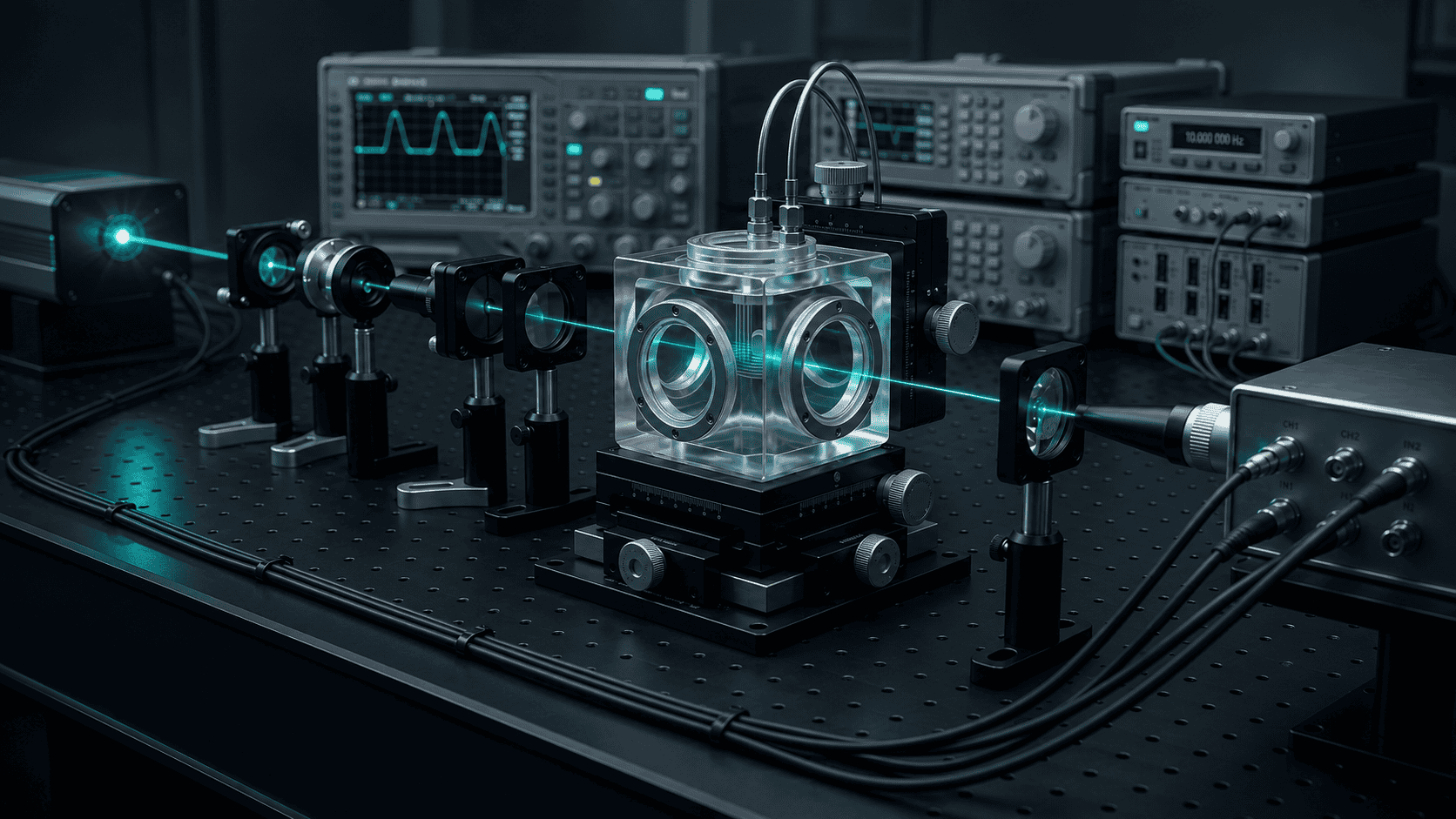
- simulation-to-bench estimators;
- field-control basins;
- material-control comparisons;
- RFH and
Prog_Tledgers; - coherence and bandwidth definitions;
- reference protocols other groups can inspect.
That matters because LTUP should grow from pieces that can be measured, compared, repeated, and revised.
The near-term question is whether programmable-physics primitives can make real systems more legible, more stable, or more steerable per joule under declared conditions. The medium-horizon question is how far those primitives can scale into coordinated space-and-motion infrastructure.
Scope
LTUP has a medium horizon and a long horizon.
The medium horizon is the general LTUP pursuit: state/coherence orchestration for space and motion. It starts with measurement and control primitives: operating regions, estimators, field-control basins, material-control comparisons, coherence windows, and energy ledgers. Those are the pieces that can be simulated, benched, compared, and improved.
The long horizon is effective-metric / adjacency engineering: whether media, fields, boundaries, feedback, and coherence control can produce reliable changes in effective adjacency, propagation, basin structure, or state projection. Tool lineages such as GU/Y14 belong here as hypothesis generators for that horizon. The route into it runs through primitives that survive declared gauges.
The public LTUP claim is simple:
Space and motion should be investigated as state/coherence orchestration under CCT discipline.
The Path Forward
The path is staged:
- Define gauges for measurement scaling and steering per joule.
- Use simulations to find operating regions and weak branches.
- Build benches that test selected measurement and control claims.
- Learn which timing, field, boundary, coherence, and feedback primitives survive real instruments and ledgers.
- Use the surviving primitives to design more coordinated space-and-motion infrastructure.
- Let surviving infrastructure primitives decide which effective-metric / adjacency questions become live.
Each stage should make the next question sharper.
A branch that misses still improves the map: where the regime breaks, which assumptions were too strong, and which weaker route remains worth testing.
Short Version
LTUP reframes motion as state/coherence orchestration.
CCT gives that frame its ontology and gauges.
CCT Labs gives it simulations, benches, ledgers, and protocols.
The medium-horizon aim is to reduce brute-force burden in space systems by shifting more work into timing, sensing, field structure, feedback, and coordinated physical infrastructure. The long horizon is effective-metric / adjacency engineering pursued through whatever primitives survive that path.